 |  |  | Family Status at Time of Career Formation and Family Formation after Time of Career Formation |
Family Status at Time of Career Formation and Family Formation after Time of Career Formation
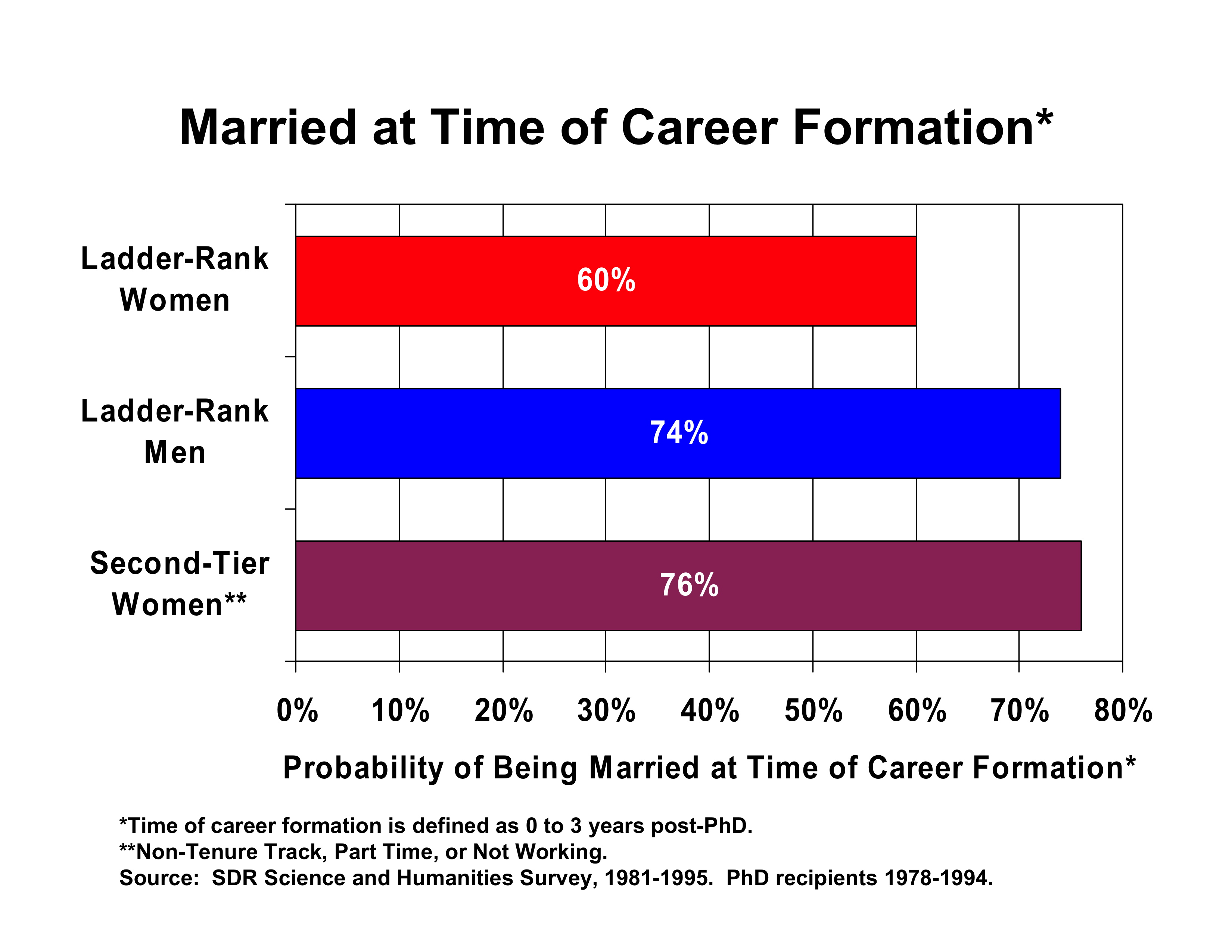
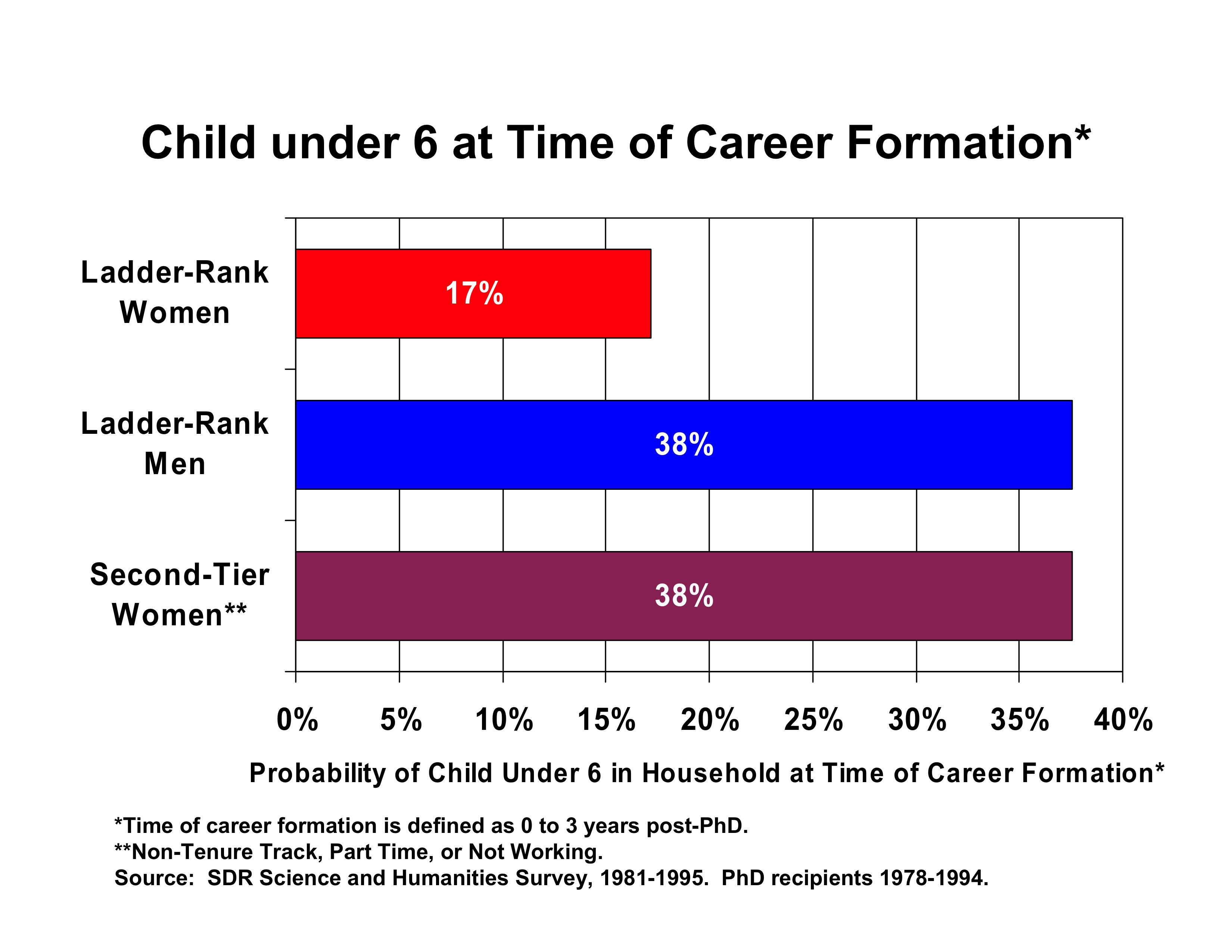
Our analysis of data from the SDR demonstrates that ladder-rank faculty careers have significantly different effects on the family patterns of men and women PhDs (Mason and Goulden 2004). To begin with, when controlling for major disciplinary field, age at PhD, prestige of doctoral program, time-to-degree, and ethnicity, ladder-rank faculty women are much less likely to be married or to have a child under 6 in the household at time of career formation -within three years post-PhD- than are ladder-rank faculty men or Ôsecond-tierÕ women (women working in non-tenure track faculty positions or part-time positions within or outside academia or not working).
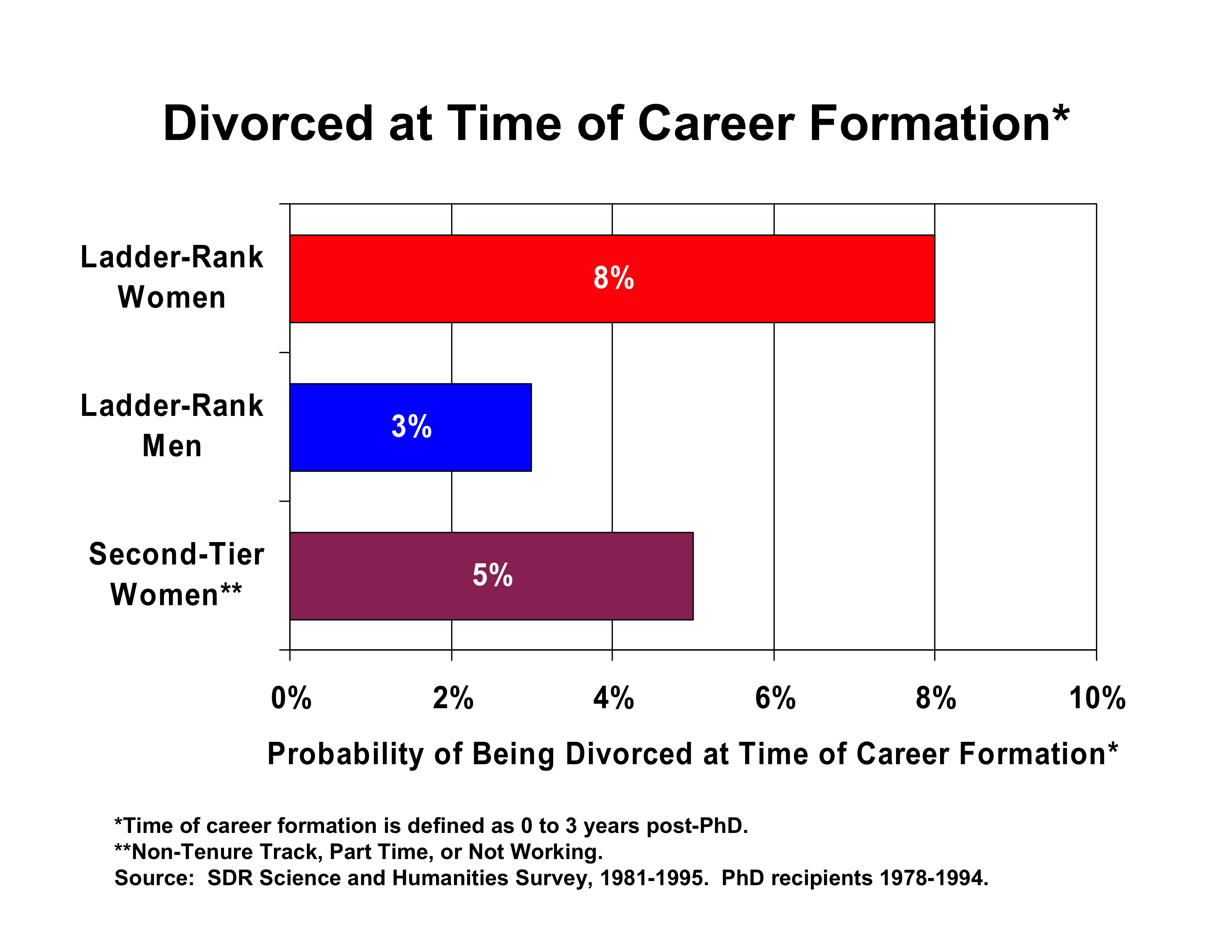
In fact, ladder-rank women are much more likely to be divorced than are ladder-rank men or second-tier women at time of career formation
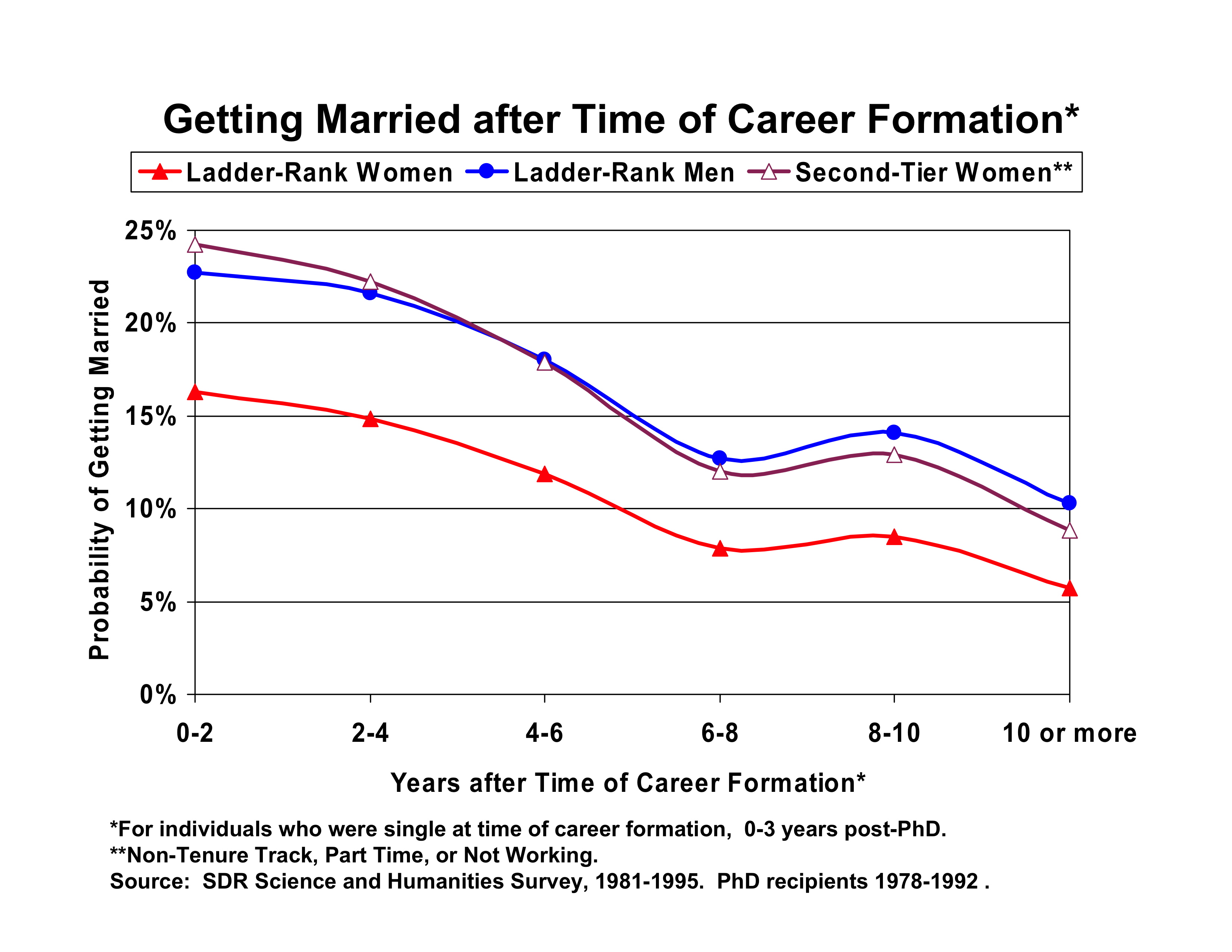
Moreover, as their careers progress, single ladder-rank women are significantly less likely than are single ladder-rank men and single second-tier women to get married
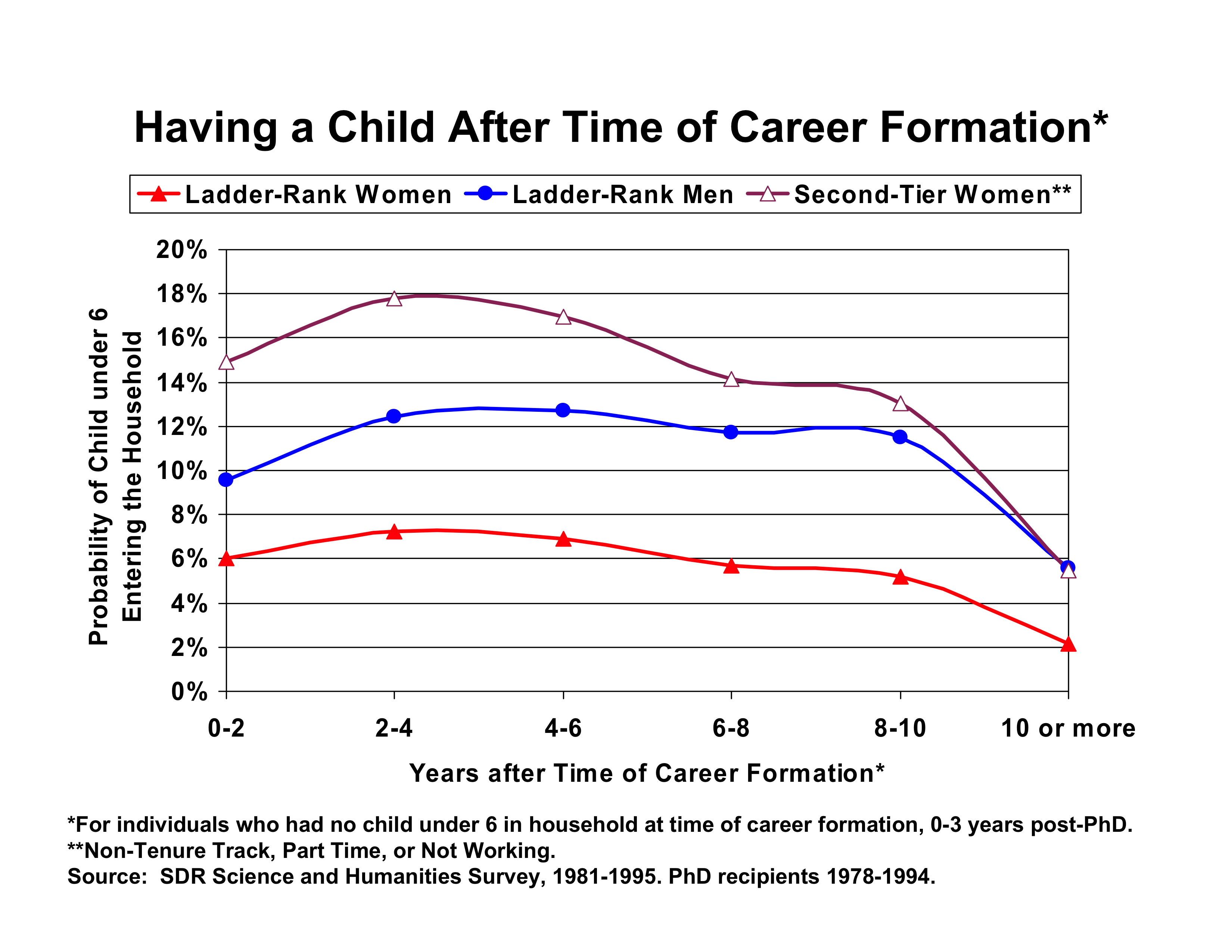
Following the same pattern of lowered rates of family formation, ladder-rank women without children under 6 are much less likely than are ladder-rank men and second-tier women to have child under 6 enter the household after the time of career formation
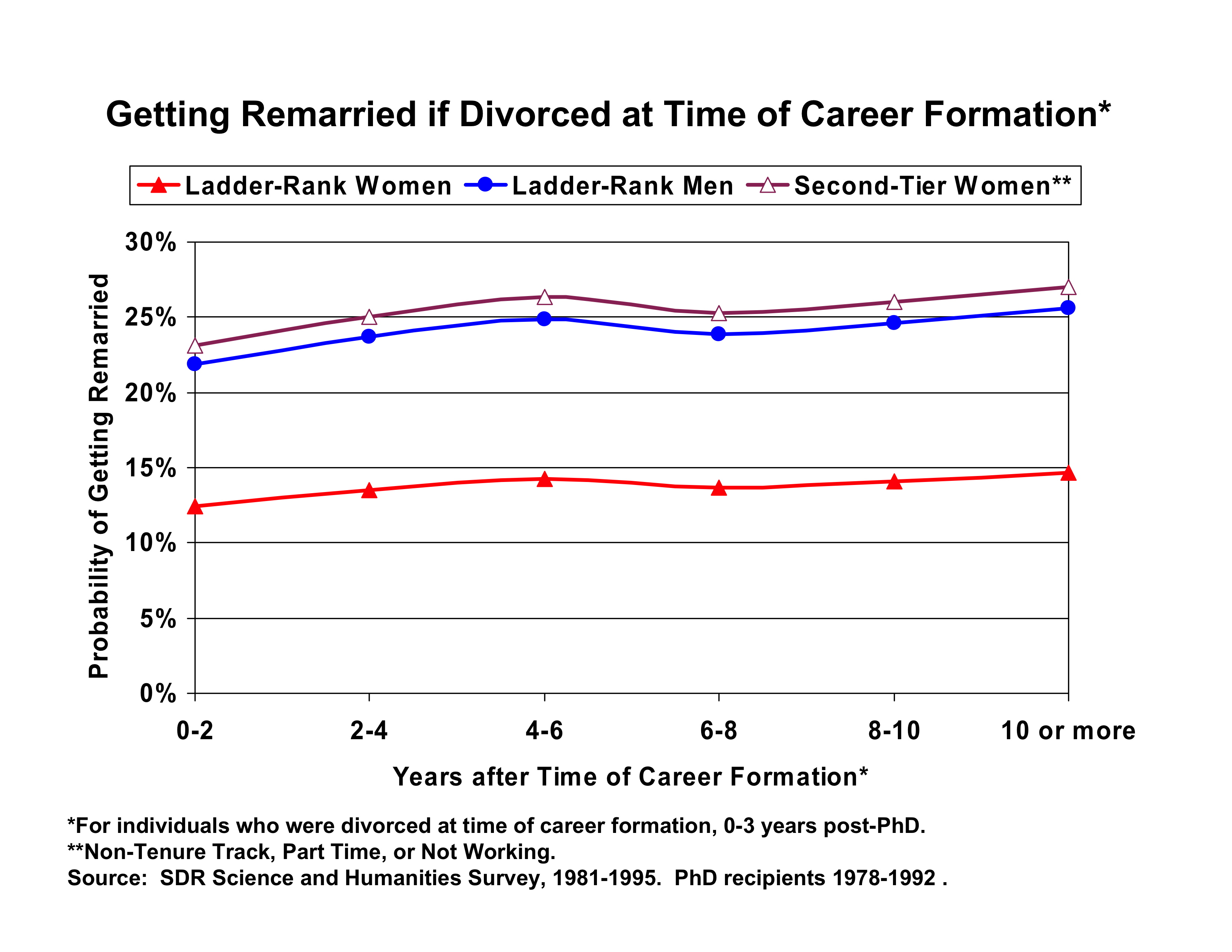
And, lastly, married ladder-rank women are much more likely than are married ladder-rank men and married second-tier women to become divorced as their careers progress [Slide 13], and divorced ladder-rank faculty women are less likely than divorced ladder-rank men and divorced second-tier women to remarry.
Robert M. Gray, September 12, 2004
| | | Family Status at Time of Career Formation and Family Formation after Time of Career Formation |